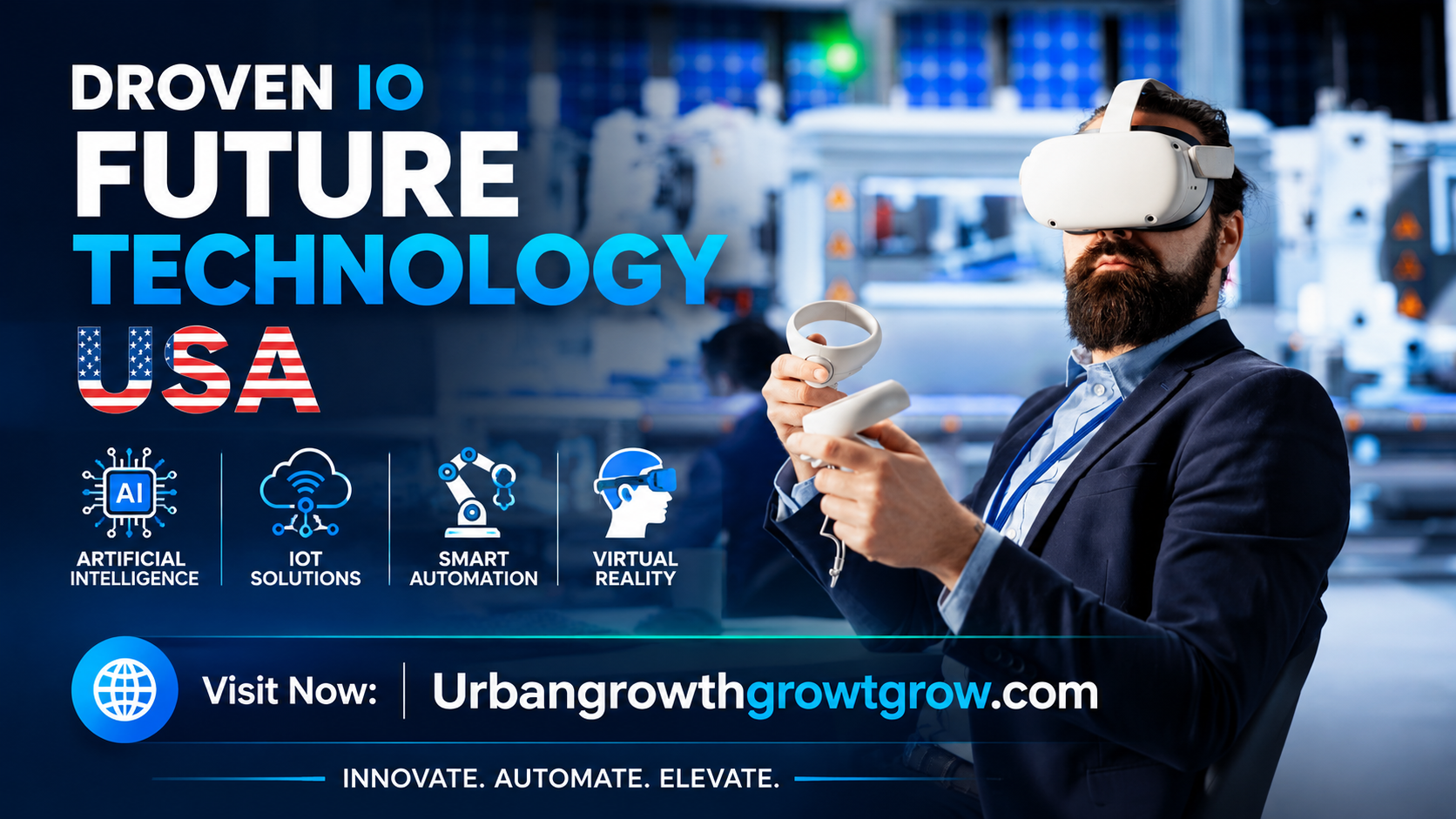
Technology doesn’t wait for anyone. Blink, and something that felt futuristic last year is already running quietly inside your phone, your car, your bank app. The United States sits right at the center of this shift. And driven.io future technology usa is one of the clearest ways to understand where things are headed — and why it actually affects you. This isn’t a jargon-heavy tech explainer. Think of it as a straight-talk guide to what’s happening in American technology right now and what it means for real people.
Why America’s Technology Shift Feels Bigger Than Before
Every few decades, a wave of technology reshapes how the world works. The internet did it in the 90s. Smartphones did it in the 2000s. What’s happening now is bigger than both — because it’s not one technology changing everything. It’s several powerful systems maturing simultaneously and connecting. Artificial intelligence, cloud computing, automation, robotics, and cybersecurity aren’t separate stories anymore. They’re one story. And the USA is writing most of it.
What Droven IO Actually Represents
Droven IO isn’t a product you download or hardware you buy. It’s better understood as a platform that pulls together everything happening in American digital innovation — AI trends, automation tools, cloud infrastructure, and startup growth — and makes it digestible for real people. Whether you’re a business owner, a student, or just someone trying to make sense of why the world keeps shifting, that kind of clarity has genuine value.
The Technologies Driving Change Right Now
| Technology | What It Does | Real-World Example |
| Artificial Intelligence | Learns from data, makes decisions | Fraud detection, customer support |
| Cloud Computing | Stores and runs systems online | Netflix, enterprise software |
| Edge Computing | Processes data near the source | Self-driving cars, smart factories |
| Automation & RPA | Handles repetitive tasks | Invoice processing, data entry |
| Robotics | Physical task automation | Warehouses, manufacturing |
| Cybersecurity | Protects networks and data | Banking security, data protection |
These aren’t isolated trends. They work together. A smart factory runs on robotics, edge computing, IoT sensors, and AI analytics all at once. Pull one piece out and the whole system slows down.
Artificial Intelligence — Already Here, Still Growing
People still talk about AI like it’s coming. It arrived. Your streaming service recommends shows for it. Your bank flags fraud with it and email filters spam through it. Machine learning and neural networks quietly became infrastructure — the kind of thing you only notice when it stops working. What’s shifting in 2026 isn’t that AI exists. It’s how deeply it’s baked into actual business decisions. Companies use AI for decision support — spotting customer patterns, predicting supply chain problems, adjusting pricing on the fly. Businesses that figured this out early aren’t just cutting costs. They’re pulling ahead of competitors, still playing catch-up. The real challenge now isn’t getting access to AI. It’s using it without creating new headaches — bias in hiring tools, diagnostic errors, and over-reliance on predictions that sometimes miss the mark. That tension is exactly what makes droven io future technology USA such a relevant conversation in 2026.
Cloud and Edge Computing — The Invisible Foundation
Nobody talks about the cloud the way they used to. It became boring, which means it became essential. Every serious business in America today runs on cloud infrastructure in some form. What makes this moment genuinely exciting is that cloud technology is no longer just about storage — it’s getting smarter and faster at the edges. Literally. Edge computing moves data processing away from distant servers and closer to where data is actually created. A self-driving car can’t wait for a data center to respond. A hospital monitor can’t afford lag. Edge computing keeps the intelligence local and fast. Hybrid cloud models that blend centralized and edge systems are becoming standard across manufacturing, logistics, and healthcare. Companies still running on old, rigid IT are watching the gap between themselves and cloud-native competitors grow wider every quarter.
Automation — Redirect, Not Replace
Automation makes people nervous. Understandable. But the reality is more nuanced than “robots taking jobs.” Robotic Process Automation (RPA) mostly handles work nobody wanted anyway — data entry, invoice matching, repetitive reporting. Freeing people from that doesn’t eliminate jobs. It redirects them toward work that actually requires human judgment.What does change is which skills matter. Someone who understands how to manage and adjust automated workflows is simply more valuable than someone doing the same manual task repeatedly. That shift is real and happening across finance, healthcare, and retail right now.For businesses, the math is simple — automation reduces errors, speeds things up, and scales without adding proportional headcount costs. For workers, building comfort with AI tools and automation platforms is no longer optional if staying competitive matters to you.
Cybersecurity — The Part Everyone Underestimates
Every connected system is a potential target. As businesses stack on more AI tools, cloud services, and automated workflows, the attack surface grows. Cybersecurity isn’t a feature you bolt on — it’s infrastructure, and treating it as anything less gets expensive fast.Network security and data protection have moved from IT department conversations to boardroom priorities. Ransomware, phishing, and data breaches aren’t exotic threats. They’re regular operational risks that hit American businesses for billions every year.The interesting twist is AI’s role in defense. The same machine learning that attackers use to find vulnerabilities is now being deployed by security teams to detect threats and respond faster than any human analyst could manage alone. It’s an arms race — and staying ahead requires ongoing investment, not a one-time setup.
Small Businesses and Startups — Here’s Your Actual Opportunity
Big tech companies can absorb every new trend. What about everyone else? Honestly — the barrier to entry has dropped significantly. Cloud platforms, AI APIs, automation tools — much of this is accessible to small teams at reasonable cost. A two-person startup today can deploy tools that would’ve required an entire enterprise IT department five years ago.That’s the opportunity droven io future technology usa keeps pointing toward — not just what corporations are building, but how smaller operations can plug into the same technological infrastructure and compete at a level that simply wasn’t possible before.
Final Thoughts
America’s tech future isn’t one big breakthrough. It’s AI, cloud computing, automation, robotics, and cybersecurity all maturing together and connecting in ways that keep creating new possibilities. Understanding this picture isn’t just for tech professionals — it’s for anyone running a business, building a career, or trying to make sense of a world that keeps changing faster than expected. Driven IO, Future Technology USA sits at the intersection of all these threads. The smartest move isn’t waiting until the technology becomes unavoidable — it’s understanding it now, before your competition does.
Visit Urban Growth Grow for more details.